


Can You Really Change the World Starting With One Choice?
The world feels broken, but what if the solution isn’t out there—it’s within you? Every thought, every reaction, every choice shapes…


Smart speakers equipped with digital voice assistants such as Siri and Alexa are now the fastest-growing consumer technology since the smartphone.

What can we do about looming threats to our privacy online and the theft of important personal information? Ari Trachtenberg has some ideas.
 New research digs into the behaviors—both obvious and subtle—that may put you at risk of falling victim to cybercrime involving Trojans, viruses, and malware.
 Hackers are watching you this holiday season, so be as mindful of your phone as of your cash and credit cards.
 Researchers have created a new method for keeping private the data that our many devices collect about how we use them.

As concerns about privacy increase for people using mobile apps, new research suggests that trust and engagement may hinge on perceptions about how the app uses personal data and whether it seeks user input before delivering services.
The dealings that have been revealed between Cambridge Analytica and Facebook have all the trappings of a Hollywood thriller
 At a time when social network privacy is in the news, new research shows there are more ways than previously realized to reveal certain traits we might be trying to conceal.
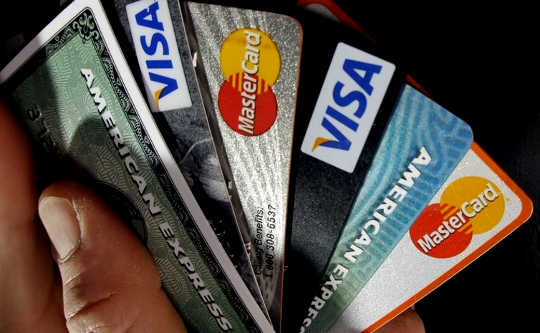 If you are the owner of a credit or a debit card, there is a non-negligible chance that you may be subject to fraud, like millions of other people around the world.
 Fictional metaphors matter, and in the battle to safeguard our civil liberties few metaphors matter more than George Orwell’s 1984. Although first published almost 70 years ago, the lasting salience of this most archetypal dystopia is undeniable.
 Harvard recently rescinded admission offers for some incoming freshmen who participated in a private Facebook group sharing offensive memes.
 Disruptions reported in at least 74 countries, including Russia, Spain, Turkey, and Japan, with some reports of U.S. infiltration as well
 We pay our monthly Internet bill to be able to access the Internet. We don’t pay it to give our Internet service provider (ISP) a chance to collect and sell our private data to make more money.

The tech revolution is coming to advertising. Chatbots are replacing humans, big data threatens our privacy, and the blockchain is linking it all together.
 A NASA scientist heading home to the U.S. said he was detained in January at a Houston airport, where Customs and Border Protection officers pressured him for access to his work phone and its potentially sensitive contents.
 As you browse the internet, online advertisers track nearly every site you visit, amassing a trove of information on your habits and preferences.
 Every January, I do a digital tune-up, cleaning up my privacy settings, updating my software and generally trying to upgrade my security.
 Facebook has long let users see all sorts of things the site knows about them, like whether they enjoy soccer, have recently moved, or like Melania Trump.
 Rogue One: A Star Wars Story, which opens in theaters this weekend, shows how the Rebel Alliance steals architectural plans for the Death Star in order to eventually destroy it.
 Kryptowire, a security firm, recently identified several models of Android mobile devices that have preinstalled permanent software, known as firmware, that serve as backdoor that collects sensitive personal data, including text messages, geolocations, contact lists, call logs and transmits them to a third-party server in Shanghai, China.
 When it comes to theft online, “you’re only protected by other, easier victims,” says Hsinchun Chen, an expert in cybersecurity.
 Enabled by exponential technological advancements in data storage, transmission and analysis, the drive to “datify” our lives is creating an ultra-transparent world where we are never free from being under surveillance.
 When Yahoo! confirmed that it had experienced a massive online attack from hackers who stole personal information from more than 500 million people — including names, emails and phone numbers — it revealed a disturbing truth about our digital media system.